


/filters:format(webp)/english-betterindia/media/media_files/2025/12/23/whatsapp-image-priyanka-tri-2025-12-23-12-24-49.jpeg "Over 600 Grassroots Women in Ranchi Trained in AI Skills to Boost Livelihoods")

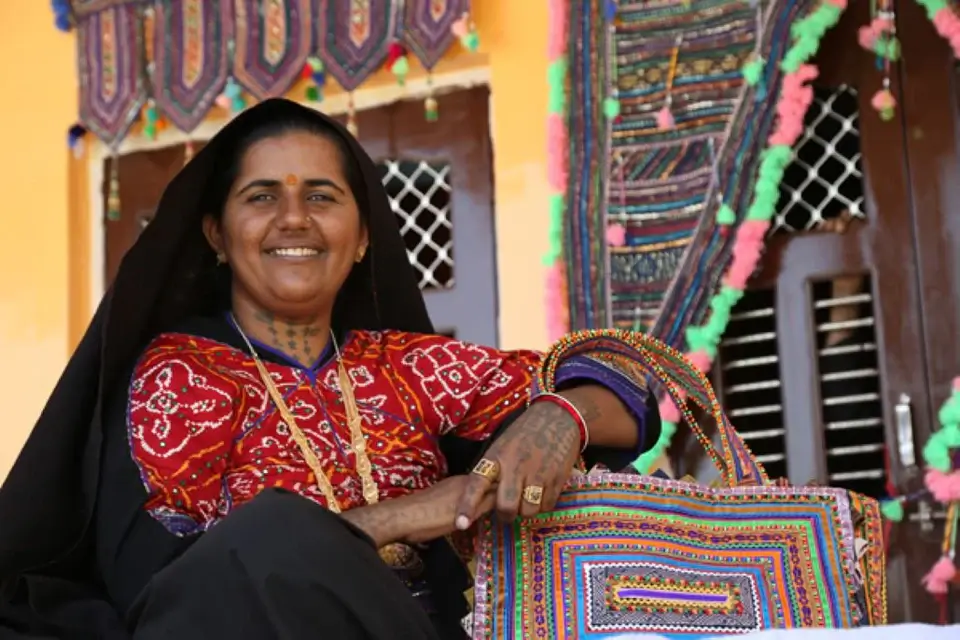

At daybreak in Kutch Unstoppable and inspiring, From Kutch to the World: A Kutchi Artisan’s Leap to Global Entrepreneurship tells the story of Pabiben Rabari, a determined woman from Kukadsar, Gujarat, who transformed the traditional embroidery of her Rabari community into the vibrant Pabi Bag — a creation that now carries the colors and spirit of Kutch across continents. From watching her mother’s needle dance through fabric at daybreak to stitching her own path ribbon by ribbon, Pabiben turned a humble village craft into a global brand, stepping onto the world stage as the proud founder of Pabiben.com
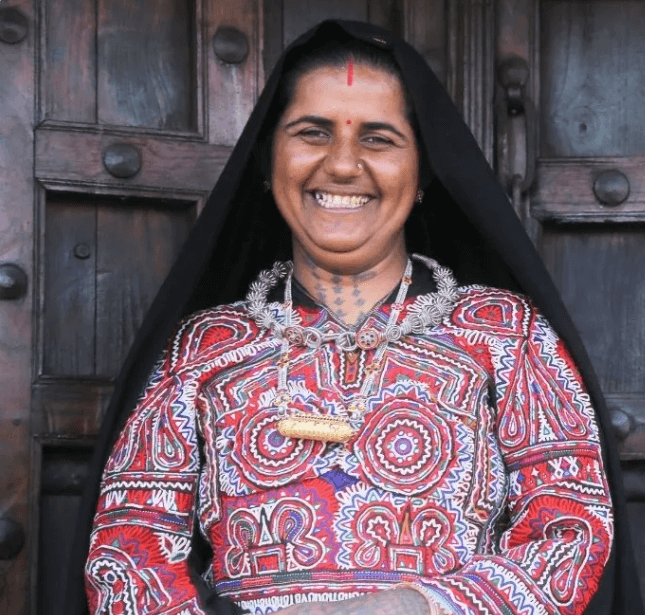
Pabiben Rabari is the founder of Pabiben.com and the creative force behind the iconic Pabi Bag-a bright, ribbon-trimmed tote that carries the spirit of Kutch to the world. Her journey threads together grit, cultural pride, and women’s empowerment—and shows how a village artisan can build a global brand without letting go of her roots.
Roots in Kutch—and an early resolve
Born in Kukadsar village in Kutch, Gujarat, Pabiben grew up the eldest daughter of a young widow. School took a back seat as she helped raise her siblings and took up small jobs—even fetching water for Re 1—before learning the embroidery of her Rabari community from her mother.
The ban that sparked an innovation
In the mid-1990s, elders in the Dhebaria Rabari community banned women from making time-intensive dowry embroidery, which threatened to push a living craft into the shadows. Pabiben and fellow artisans refused to let the tradition fade. They experimented and invented “Hari Jari”—a fast, machine-aided appliqué technique using bright ribbons and trims that honored the Rabari aesthetic while respecting the ban. In 1998, she joined a women’s group, mastered the new technique, and stitched the first sample of what became the Pabi Bag—an instant hit.
Building Pabiben.com – an artisan-owned brand
What began as a breakthrough product grew into Pabiben.com, an artisan-led enterprise that sells bags, pouches, stoles, and home accessories made with Hari Jari. The brand positions itself as “India’s first artisan-owned e-commerce marketplace”, keeping value and credit with the makers.
Breaking out globally
Pabiben’s designs moved from craft fairs to film screens. The Pabi Bag and her work have featured in Bollywood’s Luck by Chance (2009) and Hollywood’s The Other End of the Line (2008), amplifying her global recognition. She has shown at the Santa Fe International Folk Art Market and built an international clientele—including museums, heritage stores, hospitality groups, and design buyers.
Empowering women—at scale
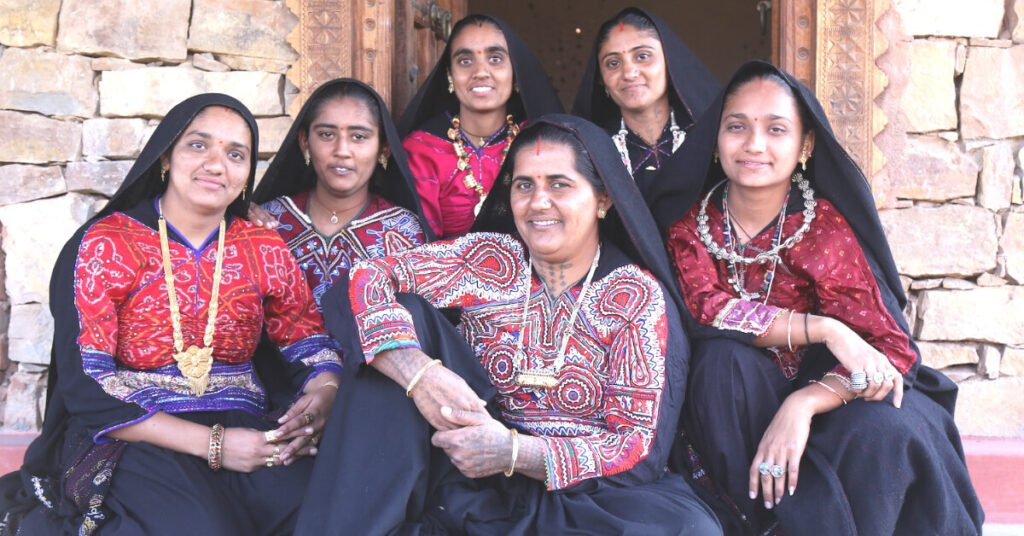
Pabiben’s enterprise is not just about products; it’s a platform for rural women. Accounts from 2021–2025 place her network at 200–300+ women artisans, providing fair incomes and dignity of work while keeping Kutchi craft relevant for contemporary markets. (Figures vary by year as the collective has grown.)
Shark Tank milestone
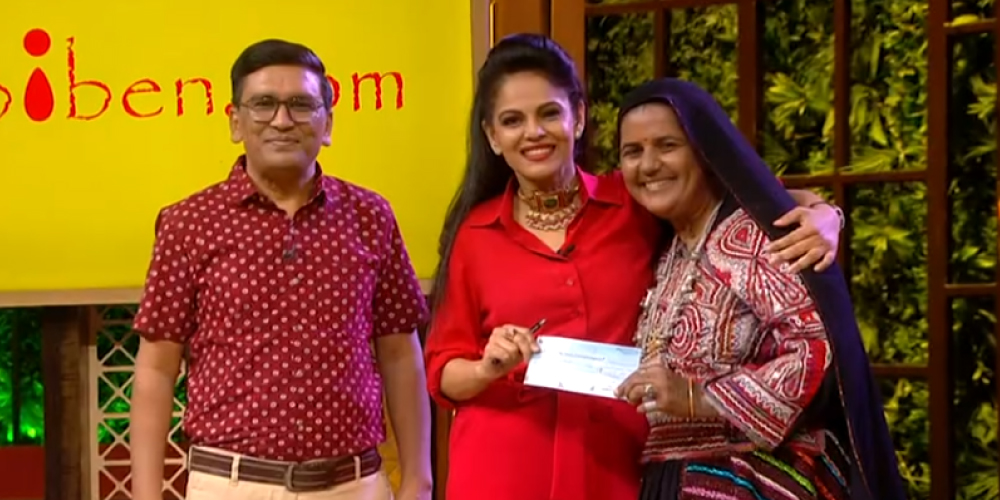
On February 14-15, 2023, Pabiben appeared on Shark Tank India Season 2 (Episode 32). She secured a mixed funding offer from Namita Thapar—₹10 lakh for 5% equity plus ₹40 lakh as 0%-interest debt—a television moment that validated the brand and its social mission in front of millions.
How she did it: the playbook behind the rise
- Respect the tradition, rework the technique. Hari Jari kept the color, mirrorwork spirit, and bold motifs of Rabari craft while making production faster, consistent, and market-ready.
- Create a hero product. The Pabi Bag gave the craft a recognizable silhouette and a name people could ask for—unlocking press, orders, and collaborations.
- Own the channel. By selling through Pabiben.com, the enterprise keeps margins and recognition with artisans, not just intermediaries.
- Leverage platforms. From the Santa Fe Folk Art Market to Shark Tank India, each stage expanded reach and trust, leading to museum and hospitality buyers.
- Build with allies. Mentorship and market linkage—through organizations and advisors like Kaarigar Clinic and craft institutions in Kutch—helped her move from artisan to entrepreneur.
Timeline (at a glance)
- 1995–1998: Community ban prompts innovation; Pabiben joins a women’s group (1998) and develops Hari Jari and the first Pabi Bag.
- 2008–2009: Designs appear in The Other End of the Line and Luck by Chance.2013: Selected for Santa Fe International Folk Art Market.
- 2015 onward: Brand gains global buyers and institutional clients; Pabiben.com expands product lines.
- 2021–2025: Network grows to 200–300+ women; multiple profiles spotlight her social impact.
- 2023: Shark Tank India S2 deal with Namita Thapar accelerates visibility and capital.
Awards & Recognition

- IMC Ladies’ Wing Jankidevi Bajaj Puraskar (2016): Conferred for rural women entrepreneurship; presented by HDFC Bank’s Aditya Puri and Tara Sharma Saluja. A landmark honour that put Pabiben on the national map.
- Quality Mark Women Award (2016): Felicitated at Mahatma Mandir, Gandhinagar, for product quality and enterprise.
- International Craft Awards — Craftsperson of the Year (Female) (2019): Recognised at India Craft Week; official winners list names “Pabiben Laxmna Rabari”.
- Prerna Award (2018): Acknowledged in Delhi for innovative artisan-led entrepreneurship.Femina × Mamaearth “Beautiful Indians” (2023): Featured under the People for Good category for empowering rural women artisans.
- Kaun Banega Crorepati (2021): National TV recognition; appeared and finished as a joint winner, taking home ₹12.5 lakh—further amplifying her social enterprise story.
- Santa Fe International Folk Art Market (2025): Selected as an IFAM artist—global stage presence for Hari Jari and the Pabi Bag.
- Shark Tank India Season 2 (2023): Prime-time pitch that showcased Pabiben.com’s artisan-owned model to a national audience and validated the brand’s mission.
Why her story matters
“Pabiben’s rise proves that innovation can be rooted in heritage. By re-engineering technique (Hari Jari), naming and branding a craft (Pabi Bag), and keeping ownership with artisans, she turned a community constraint into an economic opportunity for hundreds of women—without diluting identity.”
Also Read: Women Founders Powering India’s Consumer & D2C Boom